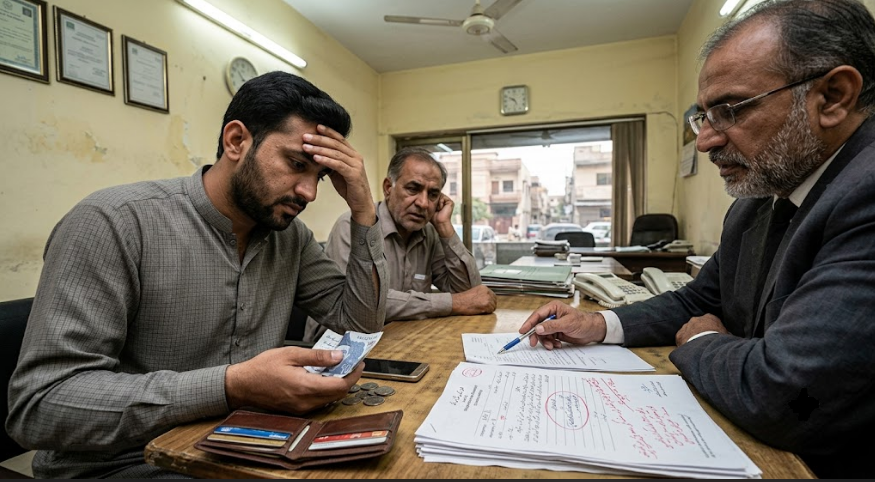
Suppose this: You spend three weeks searching for the perfect 5 Marla house in Johar Town. You negotiate hard, agree on a price of 1.5 Crore, and pay a token amount (bayana) of 5 to 10 Lakhs to lock the deal. You are happy, the dealer is happy, and you start planning the interior.
Then, two days before the Inteqal (transfer of ownership), your lawyer checks the documents and drops a bomb. The Fard (ownership document) has a dispute. Someone else is claiming possession of the property. Suddenly, the deal is dead. You have to fight to get your token money back, and you are back to square one.
This isn’t a rare story. In Pakistan, thousands of property deals fizzle out at the last minute because the traditional Fard only proves ownership on paper. It does not prove who is actually living on or possessing the property. By the time the truth comes out, emotions are high, and money is stuck.
Why the Old System Was Designed for Failure
For decades, the burden of verification was entirely on the buyer. You had to trust the dealer who brought you the listing. You had to trust the seller who swore the property was clear. And you had to trust a piece of paper that could easily be forged or delayed in the local patwari system.
The worst part? Even if you did your homework, a competing claim could surface out of nowhere during the final transfer process. This uncertainty is why property transactions in Pakistan are so stressful. People keep their savings locked in dead deals for months.
The End of the Last-Minute Surprise
Finally, the Punjab government has stepped in to kill this problem at its root with the Green Property Certificate (GPC).
This isn’t just a digital version of the Fard. It is a complete shift in how property is verified. Before issuing a GPC, the Punjab Land Records Authority (PLRA) conducts a physical survey of the property. They use NADRA biometric verification to check the identities of the owners and digitally map the exact boundaries.
In simple terms: If a property has a Green Property Certificate, it means the government has physically checked that the person selling it is the actual owner, and no one else is occupying it illegally. You can learn exactly how this process works in our complete guide on the Green Property Certificate in Punjab.
How the GPC Protects Your Token Money
If you are a buyer in 2026, the GPC is your shield against the token money trap. Here is how it changes the game:
- No More Hidden Disputes: Because the PLRA does a physical possession check, you won’t get a surprise claim from a tenant or relative on the day of the transfer.
- Instant Trust: Instead of waiting weeks for your lawyer to trace the history of a paper Fard, a GPC gives you a government-backed guarantee instantly.
- Zero Fake Documents: Since it is linked to NADRA and digital land records, forging a Green Property Certificate is nearly impossible. You can verify its authenticity directly through the official PLRA portal.
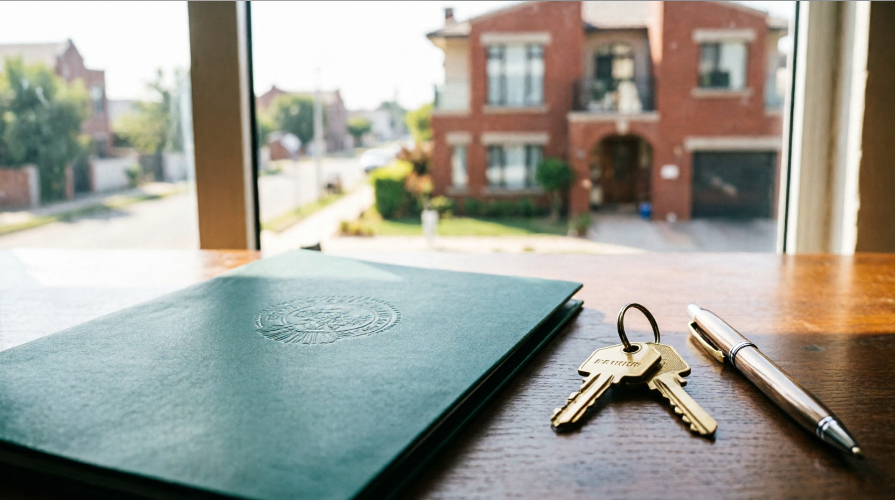
The New Problem: How Do You Show It?
So, the government created a perfect solution. But there was a missing link. If you are a buyer scrolling through property listings online, how do you know which houses actually have this certificate? Sellers couldn’t just write “GPC Available” in a description and expect buyers to believe them.
This is the exact gap that House Bazar was built to fill. We realized that a certificate sitting in a drawer doesn’t help anyone. It needs to be visible the moment a buyer is making a decision.
When a seller lists their property on House Bazar, they can request GPC verification. Our team doesn’t just tick a box; we manually verify the certificate with the seller over WhatsApp. Once confirmed, the listing gets a bold green badge right next to the title.
Selling a Property? Make It a Zero-Risk Deal
If you are a seller, you need to understand the psychology of the 2026 buyer. They are terrified of losing their token money. They will choose a house that is slightly more expensive if it means zero risk of fraud.
By getting your GPC and having it verified on House Bazar completely free, you are telling the buyer: “This is a clean deal. Pay the token money with confidence.” You skip weeks of back-and-forth questioning and jump straight to the final negotiation. If you already have your certificate, check out what to do next in our guide on what to do after getting your Green Property Certificate.
How to Use This to Your Advantage
Whether you are buying or selling, the strategy is simple: Demand and display verification early.
As a buyer, stop wasting time on vague listings. Look for the verified badge, use the direct WhatsApp button to ask for the GPC number, and only release your token money once your lawyer cross-checks the PLRA records. For a deeper dive into this process, read our breakdown of the safest way to buy property in Pakistan.
As a seller, stop letting bad deals waste your months. Get your certificate, list your property properly, and let the verification do the heavy lifting. If you are ready to reach serious buyers, you can start right now by learning how to post your first listing on HouseBazar.
Final Thoughts
The token money trap existed because the system allowed information to be hidden until the very last minute. The Green Property Certificate has cured the disease, and the free property listing platforms like House Bazar are making sure the cure actually reaches the people.
Don’t let another deal fall through at the registrar’s office. Insist on verification, insist on transparency, and make your next property transaction completely stress-free.
Comments